Has Covid-19 proven that education technology has been an utter failure?
Read MoreVR Headset, by Terry Freedman

VR Headset, by Terry Freedman
Has Covid-19 proven that education technology has been an utter failure?
Read MoreThe use of technology to put classes online makes it even more important for teachers and students in online classes to spend some time getting to know the technology they will be using — even if they think it won’t be a problem for them.
Read MoreOver the years I have taken part in, and hosted, a number of online talks, webinars and discussions. Until Covid-19 changed everything, I hadn’t given much thought to what I’ve actually learnt in terms of the process involved. But now I thought I’d share a few things I’ve learnt.
Read MoreIs a virtual school a way of enabling schools (and school districts) to provide a full curriculum given the teacher shortages in key subjects?
Read More
mobile phone, by Terry Freedman
Allowing students to use their phones certainly brings with it some challenges. However, the potential benefits are great.
Read More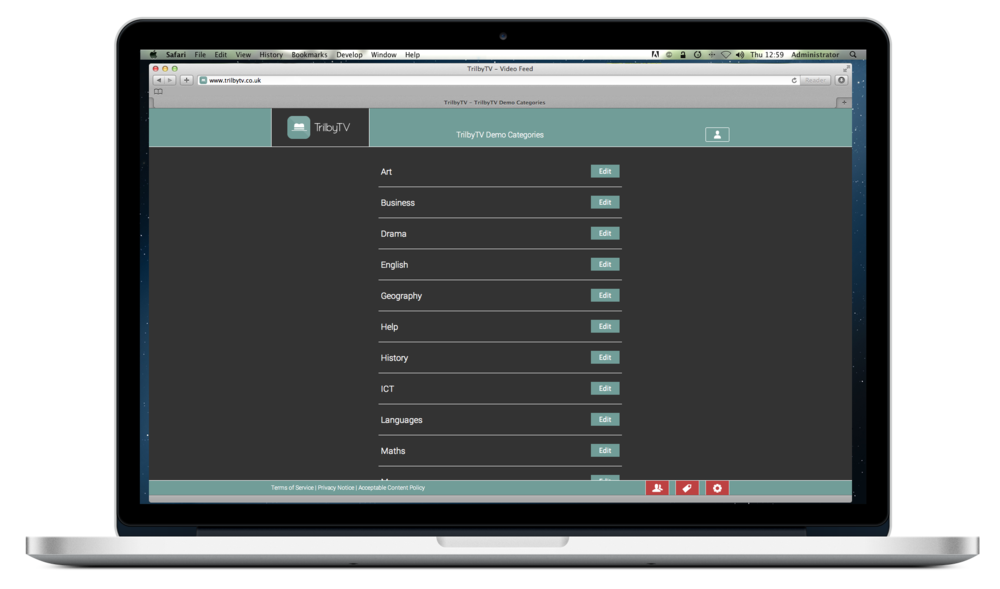 Sponsored article. Many schools across the country have invested in tablet technology, but are they using them to their full potential? Research indicates that used correctly, tablets are fantastic learning tools and can really inspire students and aid teaching. A potential barrier to tablet technology being fully utilised in schools is the complexity of storing and moving work and sharing finished pieces between students and staff.
 I was discussing with a colleague the fact that some of us were trying years ago to introduce mobile technology into education. I can’t speak for others, but certainly for me it was an insight into how Sisyphus must have felt. He, as you may know, was the hapless guy who was condemned to push a huge rock to the top of a hill, only to see it roll all the way down again within inches of reaching the top. Doing that once would have been bad enough, but he was sentenced to do it forever.
 Here are a couple of interesting cartoon strips about the (possible) effects of new technology. Yesterday’s one is more about unintended consequences, while today’s is really about how apparently intelligent software and monitoring systems might be fooled.
 Should schools have Acceptable Use Policies? The following article was originally published in April 2008. Apart from the references to the ‘recent’ Byron Review and to Becta, it still seems very apposite to me. If I were writing the article today, I’d bring in Responsible Use Policies, but otherwise I believe it still stands. What do you think?
One of the things recommended by the recent Byron Review into keeping children safe in a digital world was for schools to have acceptable use policies
 I’ve had the enormous pleasure of having to go into London two days running! “Pleasure?!”, you say. “What? With all those people?” Definitely. In fact, it’s partly ‘all those people’ that make it a pleasure. That, the architecture, the general buzz. I’m definitely with Samuel Johnson on this one:
Sir, when a man is tired of London, he is tired of life.
Which is partly why I always carry a camera around with me. As I explained in Pictures as stimuli, pictures can act as, erm, stimuli. You should always carry a camera of some sort around you, and so should the kids you teach. Oh wait, yes, many of them probably have mobile phones that can take photos and video. Fantastic!
 Why has New College gone down the Bring Your Own Technology (BYOT) route? An obvious factor is cost. But there’s also another, less prosaic reason...
 If a school wishes to go down the Bring Your Own Device (BYOD) route, what are the conditions necessary to make this possible in a useful (ie learning enhancing) and hassle-free way?
From my research into schools which have gone down this road, or at least started to, I have come to the conclusion that there are three at least three general conditions which have to be met.
 The Bring Your Own Device scheme implemented by Invicta is a hybrid of school-supplied or specified technology for the younger students, and a true BYOD scheme, within certain limits, for the older ones.
The question arises, why have a 1-to-1 scheme given the fact that there is so much technology in the school already?
 St Crispin’s School is a slightly larger-than-average secondary school serving the town of Wokingham, England. An 11-18 school, it has 1102 students. The number of students with special education needs is about average, whilst the proportion of students from ethnic minority backgrounds is below average. Relatively few students are eligible for free school meals.
St Crispin’s was attracted to the idea of BYOD because, as Mike Elward, Assistant Head/Director of e-learning says
 Although I visited Flitch Green to talk about technology – specifically, iPads and mobile learning – I discovered that as in any good school the technology serves the vision of the school, which is about learning.
Flitch Green Academy is somewhat unprepossessing – at least from the outside. But once you go through the door, it’s a different story.
 Here is an interesting case study of how a small school has successfully introduced BYOD with a particular group of pupils.
Finborough School is an independent, ie private, all-through school, ie age range 2-18, in a rural English setting. It has 274 pupils.
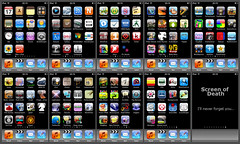 The early experience of Copland Community School in introducing iPod Touches to all new pupils.
 The school is moving towards a totally cloud-based system using mostly mobile technology. Therefore BYOD will become another facet of this by allowing students to use mobiles when appropriate, in addition to the kit provided by the school.
 Describing itself as being on the ‘networked’ stage of the continuum, Scargill school’s current Bring Your Own Technology model consists of utilising a wide range of mobile devices in school in order to enhance and support the learning in the classroom. It started with Nintendos approximately 6 years ago. But what prompted Scargill to consider a BYOT approach in the first place?
(c) Terry Freedman All Rights Reserved