An interesting article on assessment in an Australian magazine for teachers leaves a few questions to be answered.
Read MoreAn observation sheet should be more than a checklist. Picture from www.pixabay.com CC0


An observation sheet should be more than a checklist. Picture from www.pixabay.com CC0
An interesting article on assessment in an Australian magazine for teachers leaves a few questions to be answered.
Read More
What colour shall we use today? Picture from www.pixabay.com CC0
I find the notion of marking kids' work in different coloured pens ridiculous. Always have done.
Read MoreSelf-assessment is useful, but it needs to be introduced properly.
Read MoreTrying to be helpful to pupils while assessing their understanding could actually be counter-productive.
Read More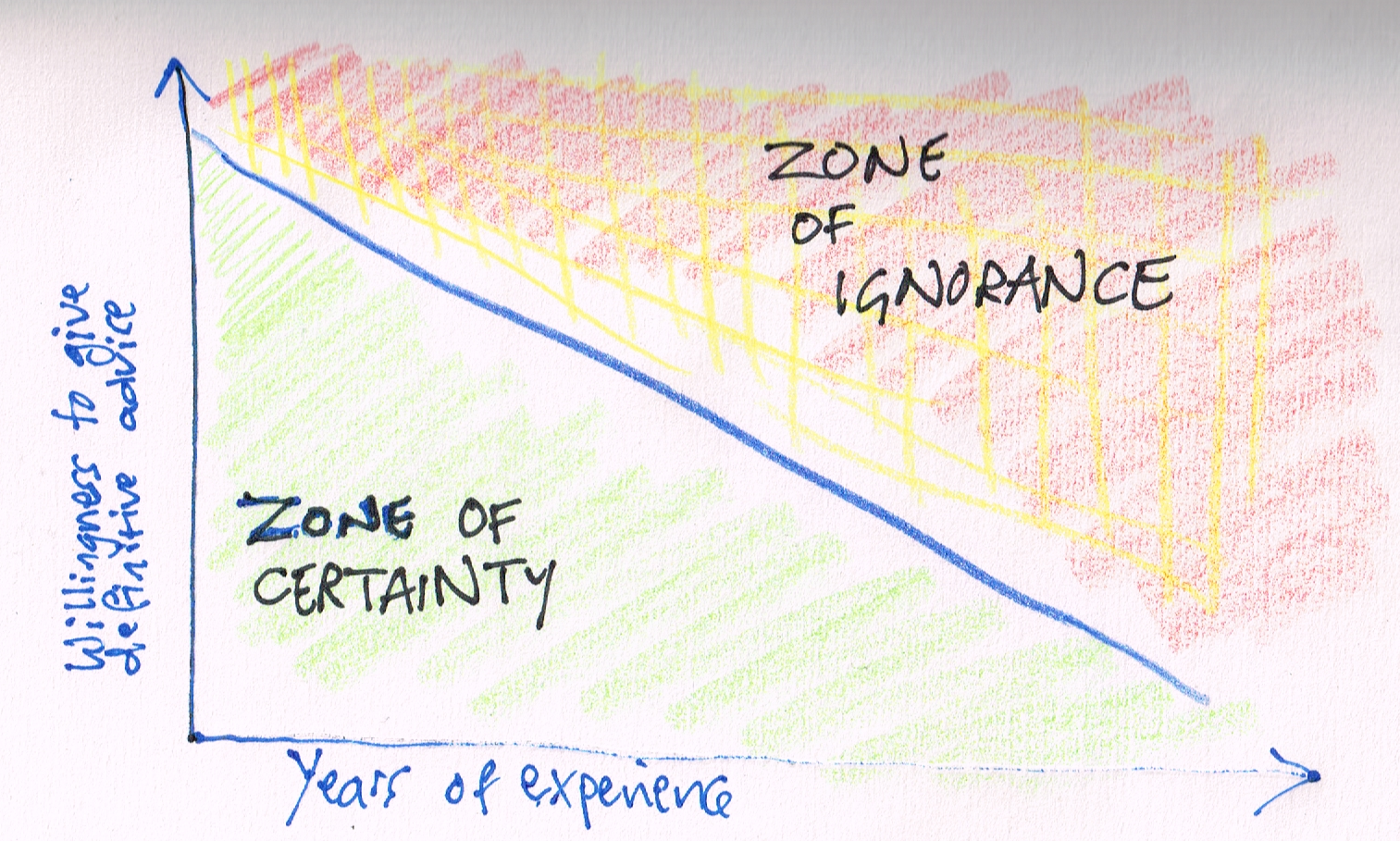
Ignorance vs certainty, by Terry Freedman
If a student fails your assessment tasks, it could be that she knows too much!
Read MoreSpotting the unexpected results of mock exams of scores or even hundreds of students need no longer be a nightmare.
Read MoreUpdated! When it comes to assessing ICT and Computing, it's worth pointing out that "solutions" which look both comprehensive and easy to implement are not necessary either, when you start to get down to considering them in depth.
Read MoreKay Sawbridge, Faculty Leader of Computing and ICT in a secondary school, has been very active in campaigning against the Government's decision to scrap ICT qualifications. It's a bad decision that could leave thousands of students "disenfranchised" in terms of what they choose to study, and will almost certainly adversely affect a disproportionate number of girls.
In this article, taken from the next issue of the Digital Education newsletter, I interview Kay.
Read MoreWhen it comes to ed tech systems, nothing beats a good conversation.
Read More
If the decision to scrap ICT qualifications has left you feeling frazzled, read on.
UPDATED yet again! The decision to "scrap" the GCSE and 'A' level qualifications in Information and Communication Technology have dismayed a lot of people. In a spirit of pragmatism rather than defeatism, I've compiled a list of eligible alternative qualifications, which you can download from here.
Read More
Open badges in a nutshell. (c) @bryanMMathers. Used with permission through a CC-BY-ND licence.
The attractive thing about badges is that a school can invent their own categories and achievement levels.
Read More
“OK, then. What do you think about this?”
I was talking to the delegates on a course I was running entitled Assessing Computing. We were discussing sources of evidence of pupils having learnt stuff.
“What if you took the view: I’m a professional, and I’ll know it when I see it?”
The reactions of the class were very interesting.
 Just in case you thought the difficulties of assessing pupils’ attainment in Information Technology are a new thing, and how terrible Levels were (are?), I thought you might like to read a report dating from 1995.
 I don’t usually like to blow my own trumpet/toot my own horn, but I thought these comments were so nice that I’d share them. I’m one of those people who, if I see a delegate looking a bit fed up, I start to wonder if they are going to storm out and demand their money back or something. I mean, it could be that they are worried about their gas bill, or that that is just their normal expression, but I start to worry anyway. So nice comments are always a bonus. Look at this one, for example:
Handsome, debonair and erudite, the presenter dazzled us with his brilliance and –
Oh, wait a minute. That’s my own self-evaluation.
 When I was crazy about film-making as a teenager (see I was a teenage geek) I never liked using fully automated cameras. Yes, they were convenient, and they saved you the bother of having to think too much, and the results were passable. But they left no room for exercising one’s professional judgement. Using a camera with a manual override button enabled you to find out what the camera “thought” the aperture and other settings should be, and then use them as a basis for your own decision.
 Can eBay teach us anything about assessment? At the Naace 2009 conference, John Davitt made an interesting point. As I recall, he said that when he started selling stuff on eBay he received more feedback on his performance than he’d ever seen in a school.
 When Michael Gove told everyone that Levels were not fit for purpose, so we don’t have to use them, we were given a great opportunity to rethink how we assess students and how to report our judgements. Unfortunately, I have had the distinct impression that many of us were finding it hard to do so. It seems that I was not imagining it.
 When it comes to judging students’ work in Computing and related subjects, there are five things that are crucial to take into account.
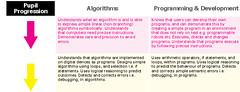 Since Michael Gove, England’s then Education Secretary, announced that Levels were not fit for purpose – the purpose being to assess and describe students’ proficiency in National Curriculum subjects – there has been a proliferation of attempts to assess Computing without using Levels. Many of these have taken the approach, quite naturally, of devising a progression grid of some sort. All the ones I’ve seen break the grid down into the Computing Programme of Study’s component parts
 Since the Government in England announced that Levels aren't fit for purpose, and so shouldn't be used, lots of people have come forward with their own ideas. With the old system of Levels, the description of each Level was given. You didn't have to think about what Level to give a student who could do certain things: all you had to do was look at the Level descriptors, find the one that was the best fit, and that was it: job done.
(c) Terry Freedman All Rights Reserved